Ινστιτούτο Νίκος Πουλαντζάς
Birkbeck Institute of the Humanities
Θεωρία στο Μέγαρο
ΕΦΣΥΝ ‘Πολιτικά & Φιλοσοφικά Επίκαιρα’
Open Athens

Philosophical and topical thoughts on Christmas


Philosophical and topical thoughts on Christmas
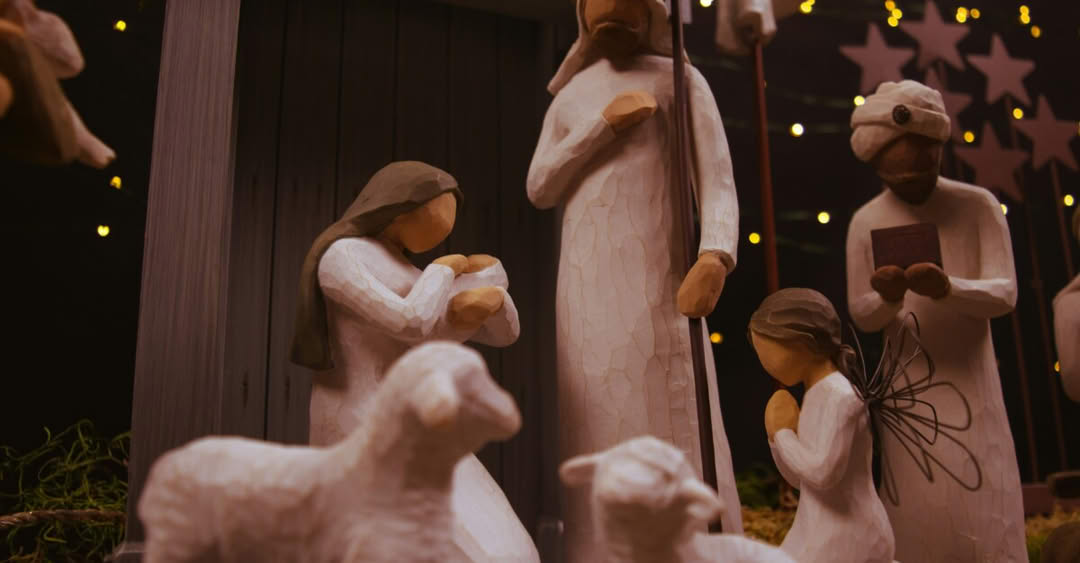
When I was growing up in the 1960s and 1970s, we would go to church on Christmas Day at 5 a.m.. At around 9 a.m., when we returned home, we would eat a bowl of lamb soup—we had been fasting for a long time—and talk about the past year. When I came to London in 1974, I soon realized that Christmas and Boxing Day were different: celebrations of consumption, drunkenness, and endless hours in front of the “Christmas” television. Later, Greece followed: gift-giving moved from New Year’s Day to Christmas, spiritual awakening became materialistic complacency, festive church attendance became overconsumption, with television series and game shows replacing the liturgy. To see what remains of Christmas, we must return to the philosophy that discovers the meaning of the holiday in retired theology and old family traditions.
1. Waking up early in the morning, initially a surprise and a torment, gave us a rare opportunity to see the sunrise, enjoy the dawn, and physically feel what it means to start a new day. The great philosopher Hannah Arendt bases the “human condition” on a quote from Augustine: man was created to exist at the beginning, he was made to start something new. Beginning is the greatest human quality—identical with freedom. There is always the possibility that someone, somewhere, sometime, may say, do, or attempt something that creates something new. This is “the miracle that saves the world.” The most glorious and comprehensive expression of this possibility, says Arendt, is the “good news” of the Gospel: “a child is born among us.” But birth is not simply the process of childbirth. It is the arrival of the newborn into the fabric of human relationships: the love, care, friendship, cooperation with others, responsibility or authority, imposition or submission that make up the human world.
Before every birth, before every relationship, there is the network of the world. Before the symbolic, there is this opening without which no symbol can perform its symbolic function: there is shared existence, there are others, there is the world. Of course, I cannot have direct access to the consciousness of the other, nor to their pain or joy. But I am always with the other, my existence is a coexistence, I am exposed to the uniqueness of the other and to otherness. Each of us is unique, a world, the point where people and encounters, events and stories of the past, fantasies, desires and dreams intersect and condense, a universe of unique meanings and values.
Every newborn enters this universe, this network of relationships, and at the same time changes them. Human action, the unique miraculous ability of humans, reproduces the miracle of birth. That is why all people are unique, each one a unique world.
2. At Christmas we have a double birth, divine and earthly. An ordinary story – the birth of a child – becomes sacred as the newborn is transformed into a divine being, who prefers the relationship with the transcendent father rather than with earthly parents. However, birth is also a warning. We know that the child’s life will be evaluated retrospectively by his death: he was born to die. Christmas pits birth against death. Because birth creates the human capacity for immortality, which is different from Christian eternity. Eternity belongs to (after) death. Immortality comes from the actions of people who want to leave their mark on the world. Immortality transcends individual life because it survives in the memories and stories of others. Just as birth brings a unique, new, different person into the world, so action creates unpredictable new combinations and forms in the world. For something true, exciting, and truly new to exist, something or someone must be born. Birth and action are the central categories of political thought. Action puts us in the world as a second birth.
3. The legacy of Christianity incorporated the absolute Other, what faith calls God, into the self and the social fabric. This is the secular meaning of the “emptying” of the divine: the Word became flesh, God becoming flesh emptied himself. When God became flesh, the place of transcendence, the point of the absolute Other, emptied itself and left a void, an absence that marks every aspect of life. The transcendent became embodied, becoming the triple limit of existence: the limit of action (death), the limit of the other person (the emergence of ethics first, then politics), the limit of consciousness (the black hole of the unconscious).
The self and society are based on a constitutive division, a non-coincidence of the self with itself. God entered history; by departing, he became the absolute other within me.
4. Life opens up to the future. Plans, dreams, political affiliations weave the thread of the future. But they can be overturned, dissolved; my life may end before my plans are completed. My life and my works are finite; temporariness is an integral part of existence. Finitude means two things. First, to live together, to depend on others; and second, to live with the memory of death. I am finite because my plans and I myself depend on others and, secondly, because death is within me in both senses of the word: it has been nestled within me since the moment of my birth (immanent) and it can come at any moment (imminent). There is no after, there is nothing else, everything happens or does not happen here and now. Life is nothing but a continuous journey towards death, says Martin Heidegger. My death is the only thing that belongs exclusively to me, I will not share it with anyone, it makes me unique and unrepeatable.
But as Sigmund Freud said, no one believes they will die. In the unconscious, there is a black hole. That is where the only certain knowledge we have enters. As Sigmund Freud said, no one believes they will die. In the unconscious, there is a black hole. That is where the only certain knowledge we have enters. I remember in the early 1960s that we would keep vigil over deceased relatives in the living room of their home; that was how we said our final goodbyes. “There was no room in a house where someone had not died at some time,” wrote Walter Benjamin in 1936. That is no longer the case. Western societies push the knowledge of death as far away as they can. In psychoanalytic thought, failure, fragility, and loss are a crucial part of what it means to be human.
The sense of transience and fragility is the foundation of a secular faith which, unlike religious faith, recognizes mortality as the greatest human potential.
This belief is dedicated to a life that will end and is devoted to plans that may fail. Earthly things are not “futile,” as theologians say, they are the only things that can make man immortal. Only if I recognize my transience, only when I remember to “achieve what you can today because tomorrow you may not be here,” will my plans survive in my actions and in the memory of others. They will become signs of immortality that emerge from my mortality but transcend it.
5. Before every birth, before every action, there is the network of the world: shared existence, others, relationships. There is the first other, the mother, (m)other, symbol of otherness, there are the magicians, representatives of existence as relationship. I am always together with the other who comes before me, existence is a coexistence, exposed to the uniqueness of the other and to our relationship. Every person is a unique world, the point where events and stories of the past, people and encounters, fantasies, desires and dreams intertwine and condense, a universe of unique relationships, meanings and values. Each world is a point of ecstasy, of opening and distancing, a point where we find ourselves outside ourselves, in exposure and sharing with others, immortal in our mortality, symbolically finite but imaginatively infinite.
During Christmas and New Year’s, we return to our families. We reflect on the past year, but also on time, history, and our own temporality. We meet relatives and friends, remembering the recent and the old. Together with others, in the neighborhoods where we grew up and to which we always return, as well as in the absent presence of those who have left us, let us celebrate Christmas.